Commercial Plumbing
Plumbing for Roswell Businesses
Commercial plumbing covers the systems a business relies on: restrooms that get far more use than any house, kitchen drains and grease lines, and commercial water heaters. It also covers backflow assemblies, gas lines to cooking equipment and the pretreatment systems the county requires. Roswell 24/7 Plumbing works for businesses across Roswell in 30075 and 30076, from the restaurants and shops around Canton Street to offices along Holcomb Bridge Road and the GA-400 corridor.
The difference from residential work is mostly about time and rules. A clogged drain in a restaurant is lost revenue by the hour, so emergencies are answered 24/7 and planned work is scheduled around opening hours. And businesses deal with requirements homes do not, especially grease pretreatment and annual backflow testing.
Honest note on scope: this is light commercial work. Large new-construction projects and high-rise systems are outside what we take on.
Commercial emergency calls tend to follow a pattern. Restaurant floor drains overflow during dinner service, grease lines back up after a busy weekend, and older office restrooms fail when they are busiest. The emergency line takes those calls at any hour, and planned commercial work can be scheduled around opening times.
Roswell's commercial work clusters in a few places: the restaurants and shops along Canton Street and around Roswell Town Square, the offices and retail near the Holcomb Bridge Road interchange off GA-400, and the event venues near Old Mill Park and the Roswell Mill.
24/7 Emergency Line Open
Commercial Plumbing Emergency: Keeping a Roswell Business Open
For a business, a plumbing emergency costs money by the hour. A floor drain overflowing in a kitchen, a restroom out of service in an office, or water coming up in a parking lot all need a fast response. Do these things first, then call the emergency line.
- Find and close the right valve. Know where the building main and fixture stops are before you need them.
- Stop dishwashers and sinks feeding the line. In a restaurant, every running fixture adds to a floor drain backup.
- Close affected restrooms. A sign and a closed door keep customers away from an overflow.
- Call the property manager. In a multi-tenant building, the backup may start in another unit.
Tell us your opening hours on the call so the emergency work can be planned around service. Call (770) 214-4545.
Kitchen Drains Backing Up Mid-Service?
Close the affected sinks and call. Commercial emergencies are answered around the clock.
Fulton County's Grease and Pretreatment Rules
Most of Roswell's businesses discharge into Fulton County's sewer, and the County has specific rules for commercial waste. Its code requires food service businesses that prepare food commercially to provide an approved fats, oils and grease pretreatment system, such as a grease trap or interceptor. Vehicle service and car wash facilities need an oil separator or sand trap.
The County's Commercial Pretreatment program monitors and inspects these systems and requires a permit for facility operations. New or modified grease traps go through plan review, with sizing based on the County's sewer use ordinance, often tied to seating capacity.
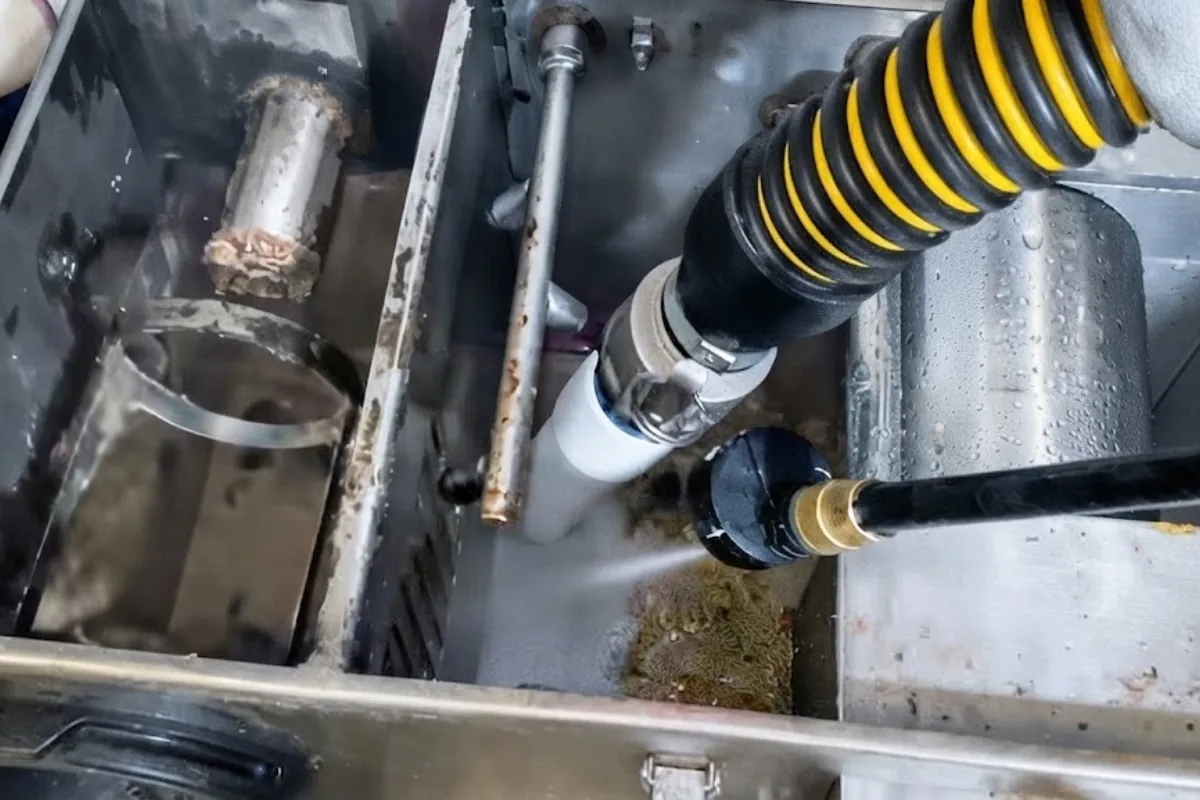
For a restaurant owner, that means three things: a correctly sized trap, a pumping schedule that keeps it within limits, and records to show an inspector. Grease that gets past the trap still ends up coating the building's drain lines, which is where jetting the kitchen lines comes in.
The IPC, which Georgia's state minimum plumbing code is based on, also sets minimum restroom fixture counts by occupancy type and calls for grease interceptors where grease-producing fixtures drain. That means a kitchen remodel or change of use can trigger both a County review and code upgrades.
Common Work
Commercial Plumbing Jobs by Business Type
Typical needs, sorted by the kind of business.
| Business type | Typical needs | Rules to keep in mind |
|---|---|---|
| Restaurants and cafes | Grease line jetting, trap issues, water heaters, floor drains | Fulton FOG pretreatment, City permits |
| Offices | Restroom fixtures, flush valves, water heaters, leaks | Backflow on domestic and irrigation lines |
| Retail and salons | Sinks, shampoo bowls, small water heaters, drains | Hair traps and drain maintenance |
| Churches and schools | High-use restrooms, kitchens, irrigation | FOG rules apply to institutional kitchens |
| Multi-tenant buildings | Tenant emergencies, shared lines, shutoffs | Clear approval process with management |
Shared sewer lines in older strip centers and mixed-use buildings can back up into more than one tenant at a time. A camera inspection shows which line and whose section is responsible.
What to Do Before We Arrive at Your Business
These steps limit downtime and damage during a commercial plumbing emergency.
- Know your shutoffs. Every manager on shift should know where the main and fixture shutoffs are.
- Stop water use on backed-up drains. Close affected sinks and restrooms and post a sign.
- Protect electrical equipment. Keep water away from panels, POS systems and kitchen equipment.
- Have the trap records handy. For grease-related backups, the pumping log helps diagnose the cause.
- Name an approver. Tell the dispatcher who can approve the work and the price.
Emergencies are answered 24/7, and repairs can often be finished before the next opening.
Leaks and Floor Drains
Floor Drains, Parking Lot Water and Leak Searches for Businesses
Commercial leak calls look different from residential ones. A water department notice about a leak at a shopping center, water surfacing in an apartment complex parking lot, or a floor drain that overflows every time the dish machine dumps all need someone who can trace buried lines across a larger site.
The search starts with the meters. A business with several meters or sub-meters can isolate one building or one line at a time, which shrinks the search quickly. Water rising through pavement often comes from a domestic service line, but some sites also have a separate fire service line. That line belongs to the fire protection contractor, and we will say so if the evidence points there.
Overflowing floor drains in kitchens usually trace back to grease buildup in the line to the interceptor, not the drain itself. Jetting the line and checking the trap baffles fixes most cases. Routine trap pumping is usually handled by a grease hauling company on a set schedule.
Cost
What Affects the Cost of Commercial Work
Timing and access matter as much as the repair itself.
Planned projects get a free estimate. Nearby Sandy Springs has a large office and retail base with similar needs, though its permitting runs through its own city.
Need commercial plumbing work scheduled? Call (770) 214-4545.
Questions
Commercial Plumbing Questions
Yes. Commercial emergency calls are taken 24/7, including floor drain overflows, restroom failures and water leaks in parking areas. After-hours work is often the best time for a business, since the repair can be finished before customers or staff arrive.
Food service businesses discharging to Fulton County's sewer do. The County's code requires commercial food preparation facilities to provide an approved fats, oils and grease pretreatment system such as a grease trap, and the County's Commercial Pretreatment program permits and inspects those systems.
Yes. Many commercial jobs are scheduled before opening, after closing or on the slowest day of the week. Emergencies are answered 24/7.
Yes. Fulton County requires testable backflow assemblies to be tested annually by a certified tester. Commercial properties often have domestic, irrigation and fire assemblies, and testing them together saves visits. Details are on our backflow testing page.
Work that installs, alters or replaces plumbing or gas systems requires a City of Roswell permit, and new or modified grease traps also go through Fulton County's pretreatment plan review.
Restaurants and cafes, retail shops, offices, churches, small medical and dental offices, salons, and property managers running multi-tenant buildings around Roswell.
Yes. Tell the dispatcher you are calling for a managed property, give the unit and the tenant contact, and note who approves the work. Work orders and invoices can be addressed to the management company.
We repair and clear the lines and traps themselves. Routine pumping is usually done by a grease hauling company on a schedule set by the size of the trap and the kitchen's volume. If a trap keeps overflowing between pump-outs, the line or the baffles likely need attention.
Sources for This Page
Grease and oil pretreatment requirements come from Fulton County Code section 82-251 and Fulton County Public Works' Commercial Pretreatment program pages. Backflow testing requirements come from Fulton County's backflow prevention program. Permit requirements come from the City of Roswell Community Development building FAQ.
Written by the Roswell 24/7 Plumbing team and checked against the sources above. Last reviewed October 31, 2026.